Quick Facts
| Name | B&O No. 21 |
|---|---|
| Manufacture Date | 1868 |
| Railroad Of Record | Central Railroad of New Jersey (CNJ) |
| Manufacturer | Wason Manufacturing Company |
| Rolling Stock Type | Passenger Day Coach |
Description
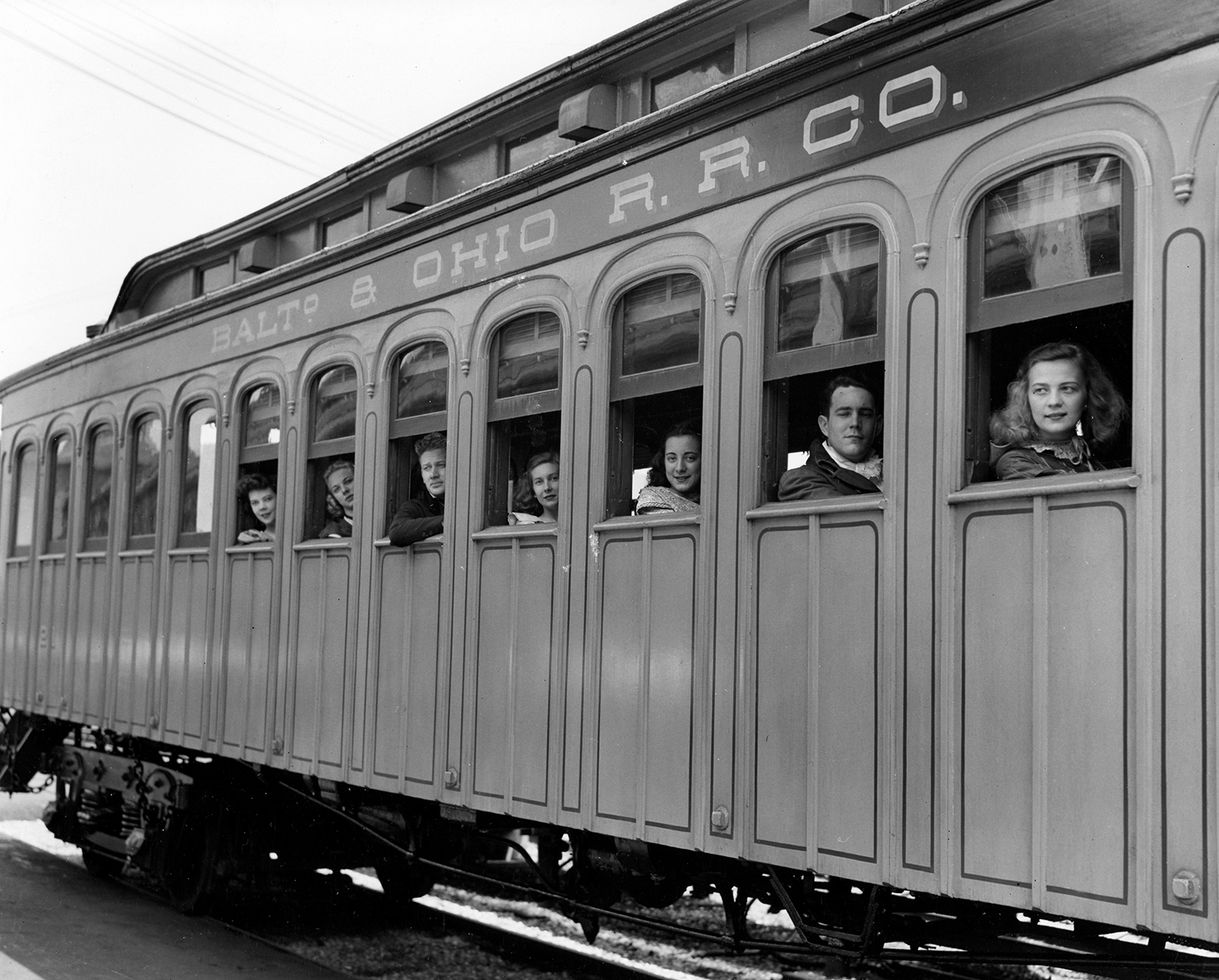
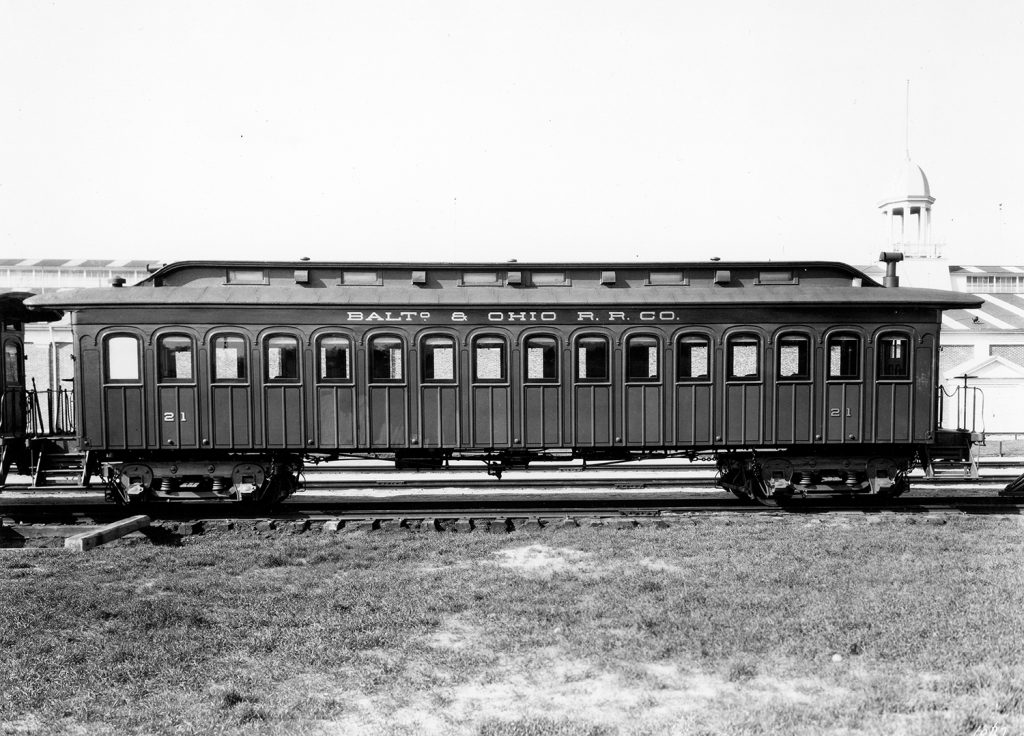
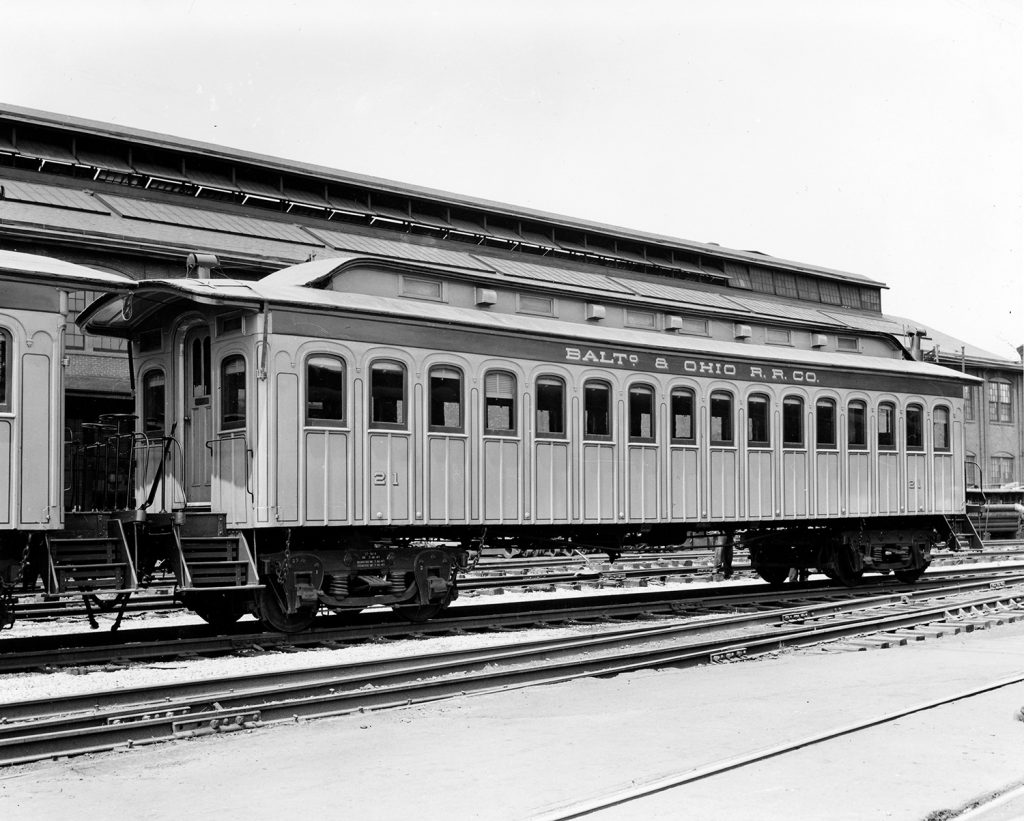
The B&O No. 21 was built for the Central Railroad of New Jersey (CNJ) by the Wason Manufacturing Company in 1868. The 19th century passenger coach was relatively comfortable for its day, with finely upholstered seats, kerosene ceiling lamps, and a ventilated roof. Two cast iron stoves provided some warmth in the winter, but they were difficult to heat, and they posed a major fire risk in the wooden car.
The No. 21 and its sibling, the No. 20, were acquired by the B&O in 1927 for the Fair of the Iron Horse, an event hosted in Halethorpe, MD to commemorate the 100th anniversary of the American railroad. There, they were displayed as standard Civil War era passenger coaches. The Civil War was the first military conflict fought by the railroad. The B&O played as especially crucial role, as it was used to carry soldiers and supplies for the Union. The railroad operated about 130 of these wooden passenger cars at the onset of the Civil War in 1861, and many more were built by the Mt. Clare shops before the war’s end in 1865. In addition to hauling troops and munitions, they were occasionally used as mobile headquarters for high-ranking military officials.
The B&O was involved in several battles that turned the tide of the Civil War. The Union won the Battle of Chattanooga in 1863 because the B&O arranged what was, at the time, the single largest movement of soldiers by rail in American history. The Union saved Washington during the Battle of Fort Stevens because the B&O had sent reinforcements to Monocacy just days prior. For this and more, the B&O became known as “Lincoln’s Railroad.” US President Abraham Lincoln described B&O President John Work Garrett as “the right arm of the Federal Government” for “the aid he rendered the authorities in preventing the Confederates from seizing Washington and securing its retention as the Capital of the Loyal States.”
After the Fair of the Iron Horse, the No. 20 and No. 21 were featured in several pageants, fairs, and motion picture films across the nation. In 2003, a devastating snowstorm caused the B&O Railroad Museum’s Roundhouse to collapse. Many collection pieces – including the No. 20 and No. 21 – were buried under snow and debris. Though the No. 20 was destroyed beyond repair, the No. 21 was saved and fully restored. The wooden coach remains on permanent display in the Roundhouse and is considered a core piece of the museum’s collection.
Can't Get Enough?
There’s even more to explore. Check out this and other unique pieces from our collection.
Did You Know?
Andrew Jackson, in 1833, rode on the B&O Railroad, becoming the first US president to ride a train.