Quick Facts
| Name | "Washington" |
|---|---|
| Manufacture Date | 1949 |
| Railroad Of Record | Baltimore & Ohio Railroad (B&O) |
| Manufacturer | Pullman-Standard Car Manufacturing Company |
| Rolling Stock Type | Observation Tavern Car |
Description
Virtual Tour:
About the B&O No. 3316 “Washington” Observation Tavern Car:
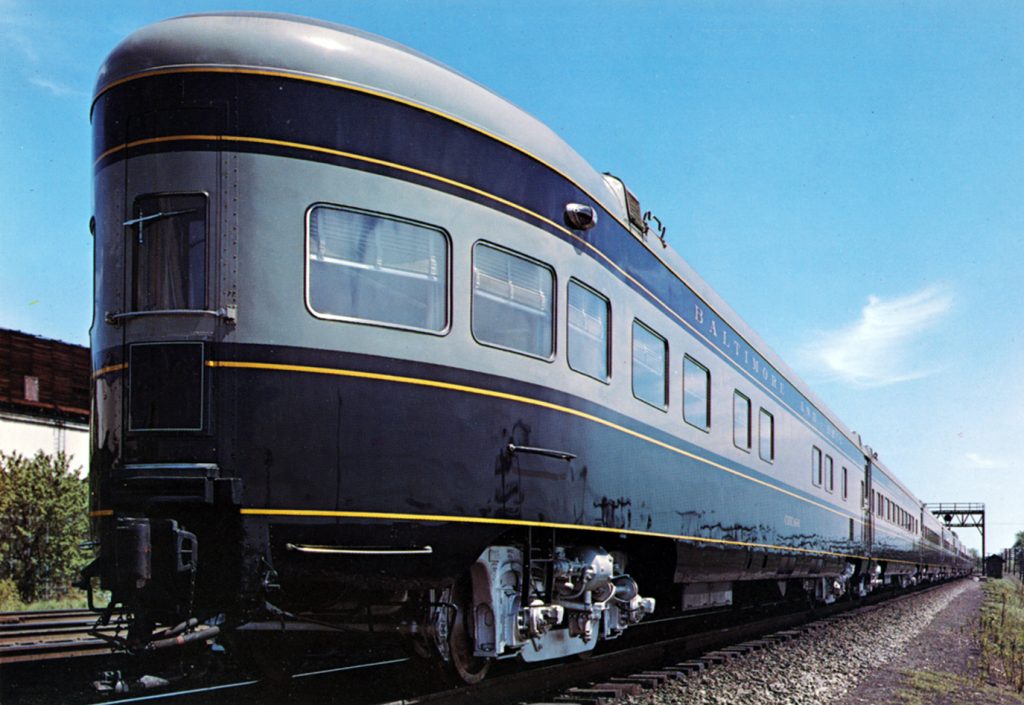
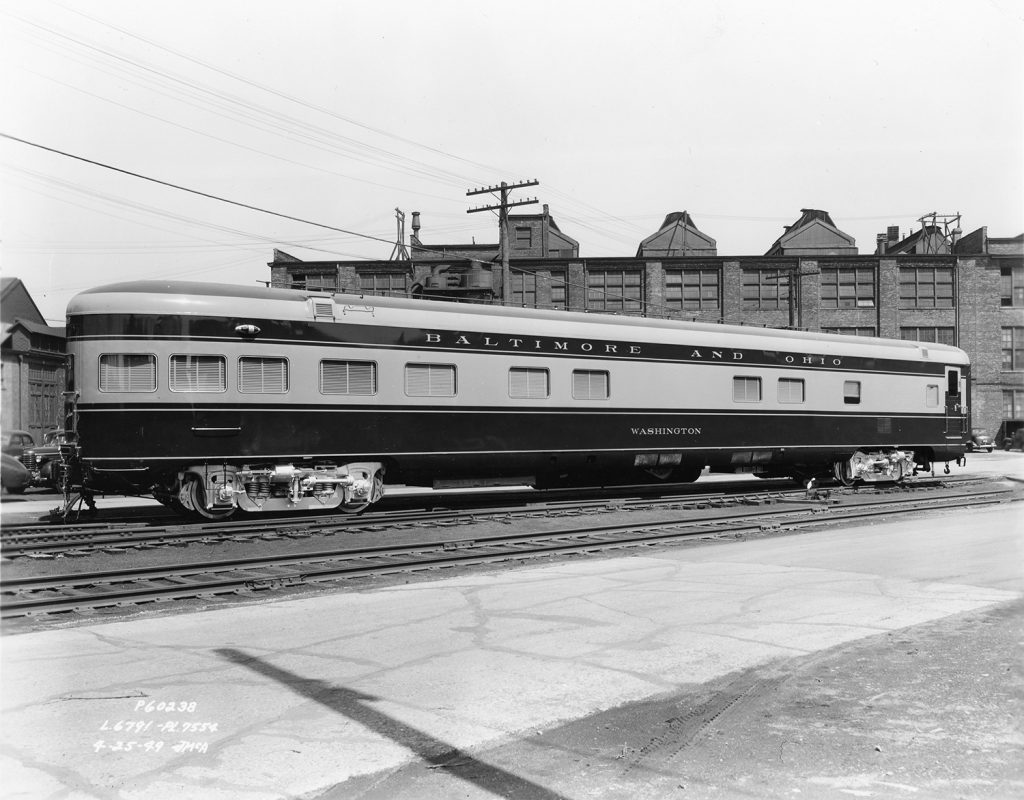
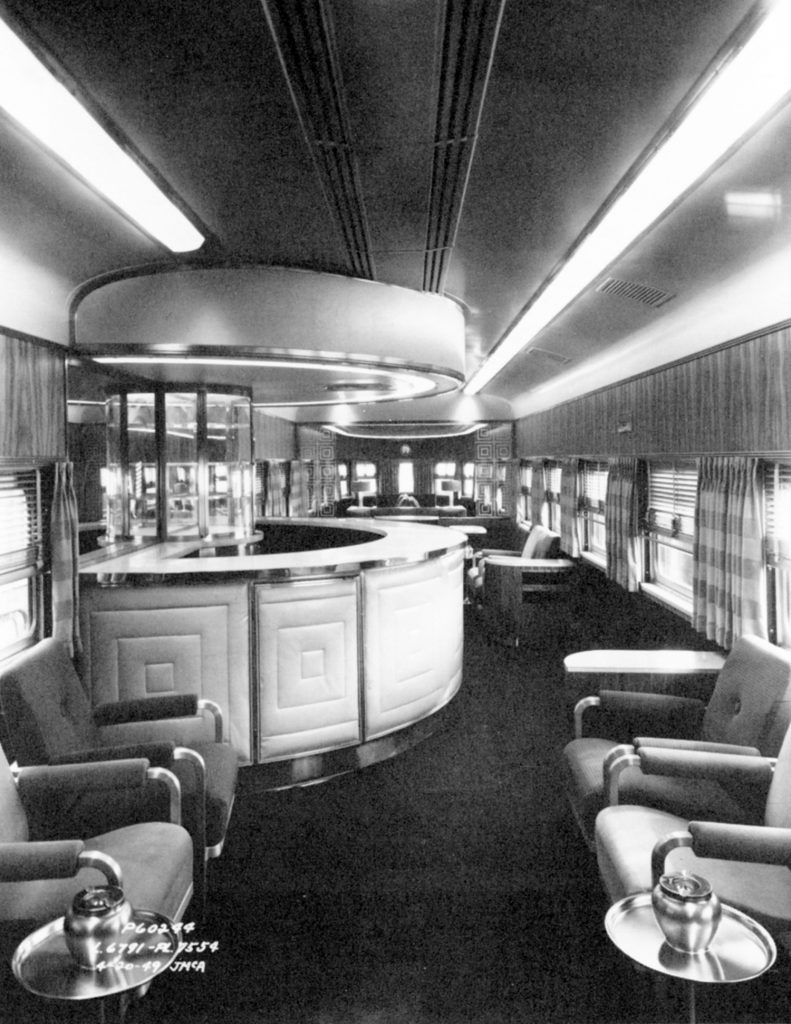
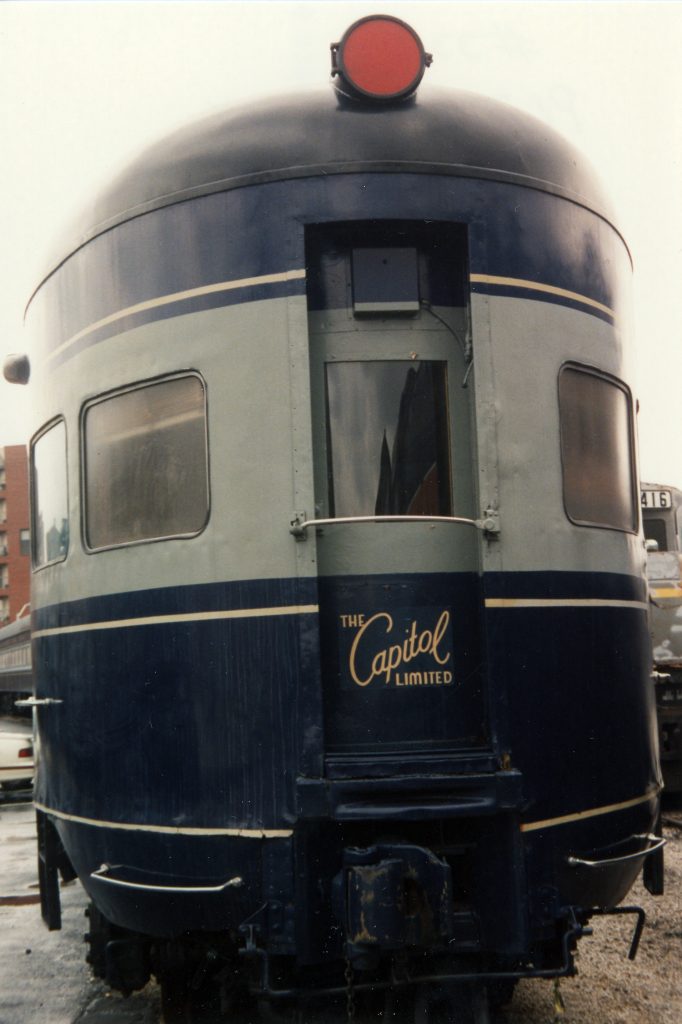
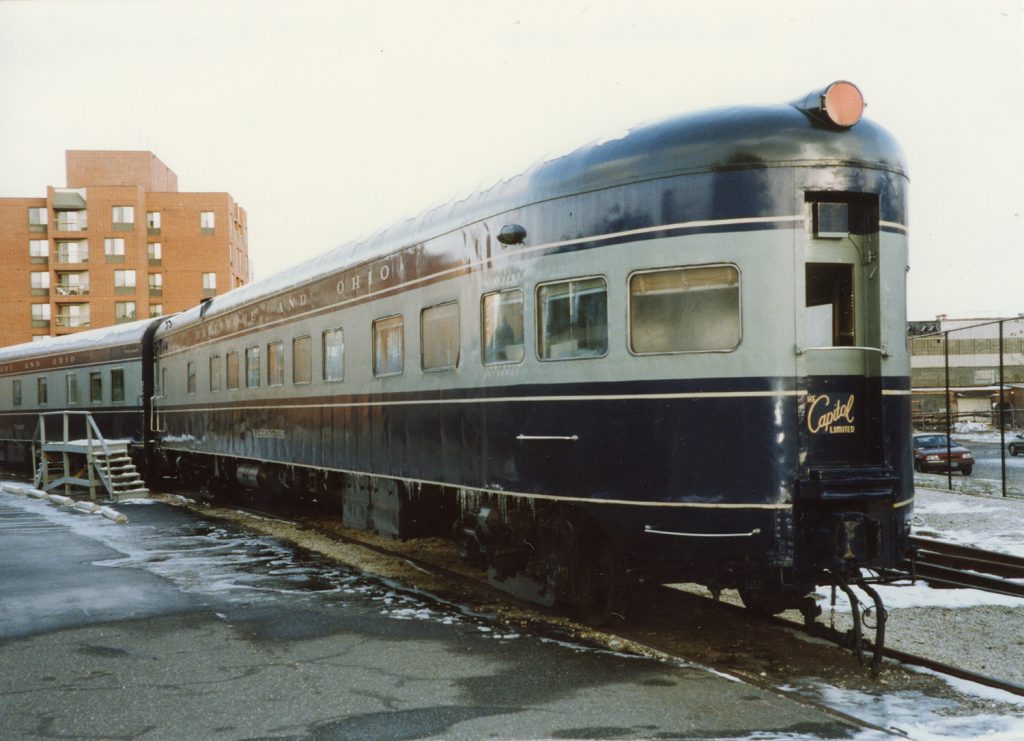
The Baltimore & Ohio Railroad (B&O) No. 3316 “Washington” is one of two lightweight observation lounge cars produced by the Pullman-Standard Car Manufacturing Company in 1949. Like its sibling, the “Chicago,” the No. 3316 was designed to travel with the Columbian, a flagship B&O passenger train connecting Washington, DC to Chicago, IL. Its layout features a 17-seat observation area and a 24-seat tavern/lounge space. At the height of railroad passenger services, observation lounge cars like the “Washington” epitomized the height of luxury travel.
The “Washington’s” design is notable for its streamlined Art Deco aesthetic. Art Deco rose to prominence on the American railroad between 1910 and 1940. Defined by its bold geometric forms, this style combined modernist aesthetics with fine craftsmanship and an appreciation for opulent materials. In the 1930s, Art Deco was further refined to include curving forms and smooth, polished surfaces. It was also during this period that the movement embraced newly available materials such as stainless steel, chrome, and plastic. Streamlining, or Streamline Moderne, was an international arts movement that emerged out of the Art Deco style in the 1930s-40s. The movement is defined by its aerodynamic shapes, long horizontal lines, and nautical/submarine themes. Pullman-Standard and other manufacturers embraced the streamlined aesthetic to make their locomotives and coaches appear sleek and technologically modern.
Like other observation lounge cars, the No. 3316 was placed at the end of the train and fitted with large windows to provide captivating views of the countryside. Passengers in the observation space would sit back in comfortable chairs and listen to recorded music and radio programs. In the summertime, they would also benefit from the car’s Frigidaire air conditioning system. A B&O Stewardess provided top-tier hospitality services while a B&O Water-In-Charge delivered drinks. Other thirsty travelers could visit the central tavern area and order libations from the stylish semi-circular bar. B&O drink menus from the mid-1900s featured a wide variety of beer, wine, liquor, cocktails, and nonalcoholic beverages. To further enhance the sense of luxury, drinks were served in decorative etched glassware. These features of the B&O No. 3316 “Washington” – the streamlined Art Deco aesthetic, observation lounge, tavern, and phenomenal customer service – were all meant to evoke feelings of elegance, privilege, and progress.
While passengers of the mid-20th century railroad traveled in luxury, service workers often lived in cramped and uncomfortable conditions. This disparity is seen when comparing the observation and tavern spaces to the Nurse-Stewardess’ quarters. The sleeping berth takes up much of the floorspace, leaving little room to move around. The small toilet folds into the sink, and miniature side table folds into the wall to provide a bit of additional space. A thin compartment next to the doorway provides just enough space for a uniform, and a few personal items could be kept in a small wall-mounted cabinet.
The B&O No. 3316 operated on the Columbian line until 1958, when it was transferred to the Ambassador train connecting Washington, DC to Detroit, MI. In 1961, the “Washington” was transferred to the all-Pullman Capitol Limited line between New York and Chicago. The coach primarily serviced the Capitol Limited until 1971, when it was retired and donated to the B&O Railroad Museum.
The “Washington” observation lounge is now on permanent display at the B&O Railroad Museum in Baltimore, MD. The car’s observation lounge and tavern space offer a unique opportunity to experience luxury travel at the height of the passenger railroad. Meanwhile, the Stewardess’ room provides information about some of the service workers assigned to the B&O’s premier passenger trains in the 20th century.
This project was made possible in part by funding from the Institute of Museum and Library Services (ST-251075-OMS-21), the Baltimore National Heritage Area through the City of Baltimore general obligation bond program, and the National Railway Historical Society.
Can't Get Enough?
There’s even more to explore. Check out this and other unique pieces from our collection.
Did You Know?
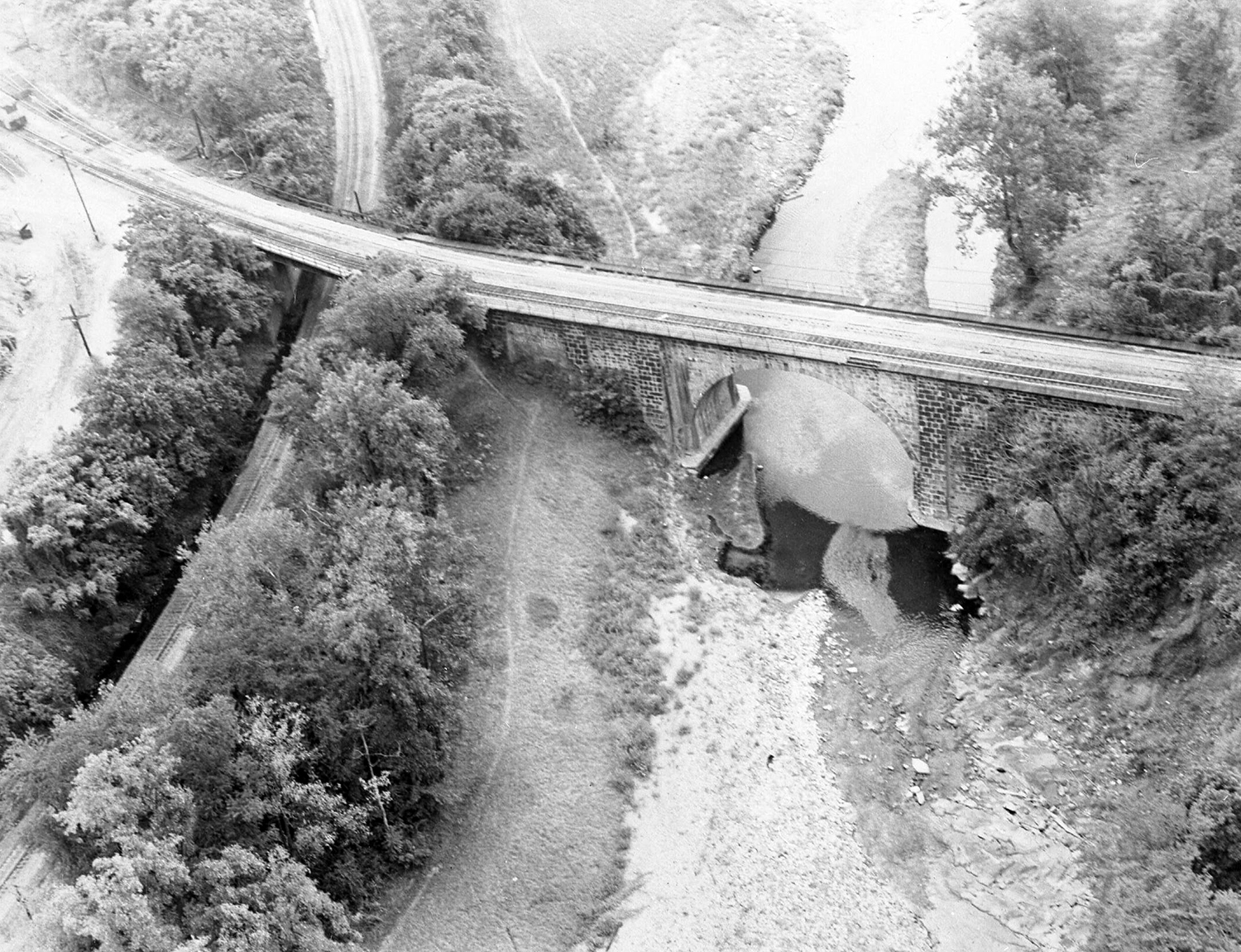
Carrollton Viaduct, one of the first major rail bridges built in the world, was constructed by the B&O in 1829 and is so sturdy that it continues to carry CSX freight trains to this day.